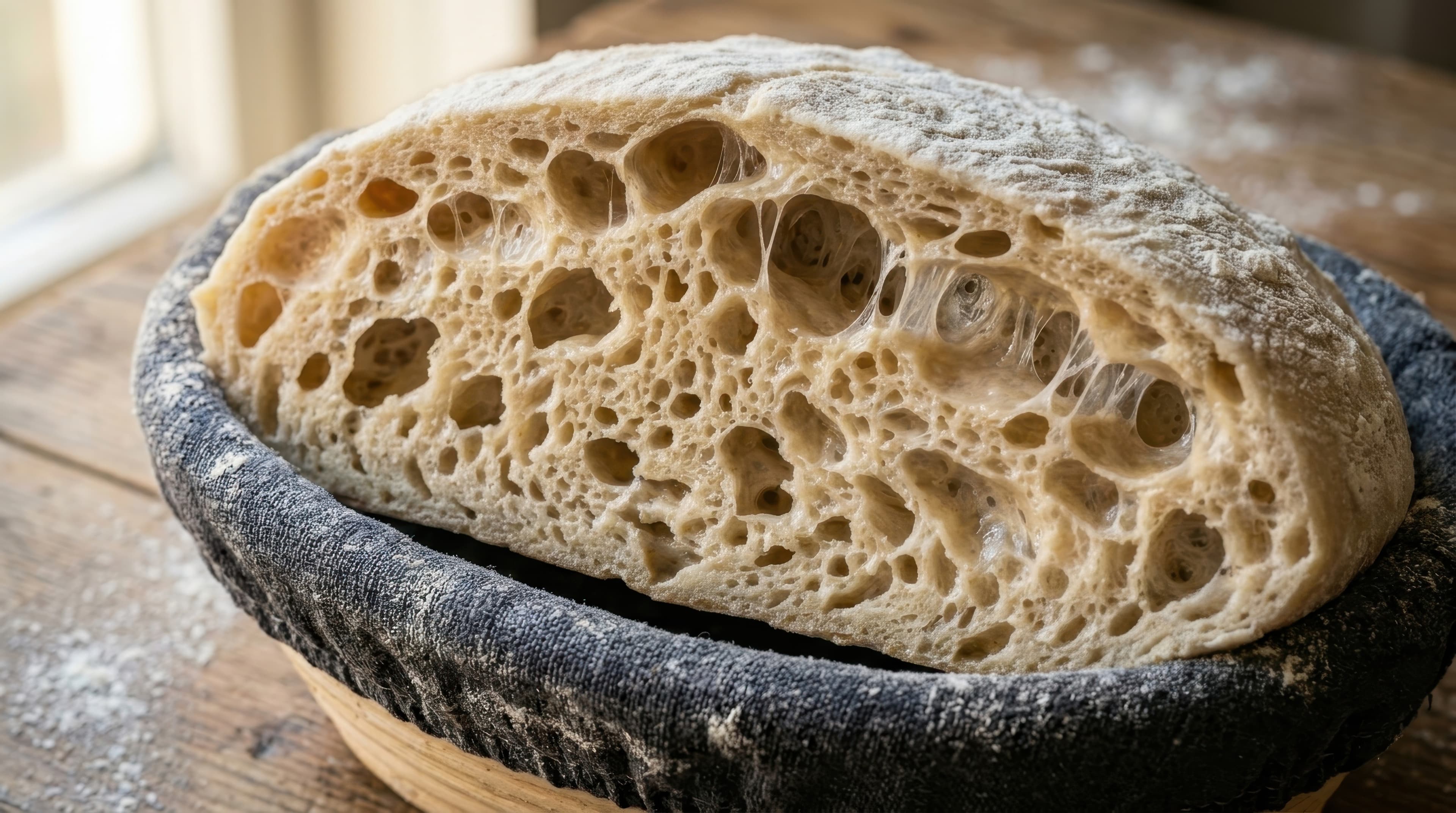
High Hydration Dough: When Your Dough Fights Back
I've been making the same sourdough sandwich bread for years. It's reliable. Forgiving. My son loves it. And then I decided to try something completely different.
My sandwich loaf is what I call a baker's butter bread. It has milk. Oil. About 57% hydration. The dough feels manageable. You can shape it. It doesn't argue with you.
High hydration sourdough is the opposite. At 75% hydration, it's just flour, water, salt, and starter. No milk. No oil. The dough is wet. Sticky. It flows instead of holds. And it will absolutely fight you. That's the whole point.
The first time I mixed 75% hydration dough, I nearly threw it out. It looked like pancake batter. I stood there in my kitchen questioning everything I thought I knew about bread.
Here's what I learned: you can't build structure through kneading with this dough. The dough is too wet to knead. So you build structure through technique.
You do stretch-and-fold every thirty minutes for the first two hours. Each fold reorganizes the gluten strands without tearing them. You're not adding energy the way kneading does. You're reorganizing what's already there.
Pre-shaping is where my sandwich bread skills abandoned me. You can't handle this dough the way you handle familiar dough. You use a bench scraper. You work quickly. You let surface tension do the work instead of your hands.
The final shape is almost meditative. You're creating tension through small folds, not aggressive pulling. You're treating the dough like something precious, because it is.
Then you cold proof overnight.
When I baked that first high hydration loaf, the oven spring was explosive. The crust blistered and crackled in a way my sandwich bread never does. The crumb was open, with irregular holes that bakeries charge extra for. The flavor was complex in a way that comes from letting the flour and water and starter do their actual work.
I still make my sandwich bread every week. But now I also make high hydration dough once a month, just to remember what it feels like to learn something new.
High hydration dough isn't harder because it's complicated. It's harder because it strips away all your safety nets and asks you to trust yourself. To slow down. To listen to what the dough is telling you instead of forcing it into what you think it should be.
If you've only ever made lower hydration bread, try it. Let the dough fight you. And then watch what happens when you stop fighting back and just listen.
Get the recipe
Download Recipe CardMore from the kitchen
Why I Built This (The Crevice Rant)
I'm holding a traditional whisk in my kitchen, and you know what I see? Dough. Dried, fermented dough tucked into every crevice. This is why Pure Peace Kitchen exists.
Breaking Up Shaggy Dough Without Losing Your Mind
Five minutes into mixing sourdough, you look down at your bowl and wonder if you've made a terrible mistake. You haven't. You've just started. Here's what nobody tells you about shaggy dough.